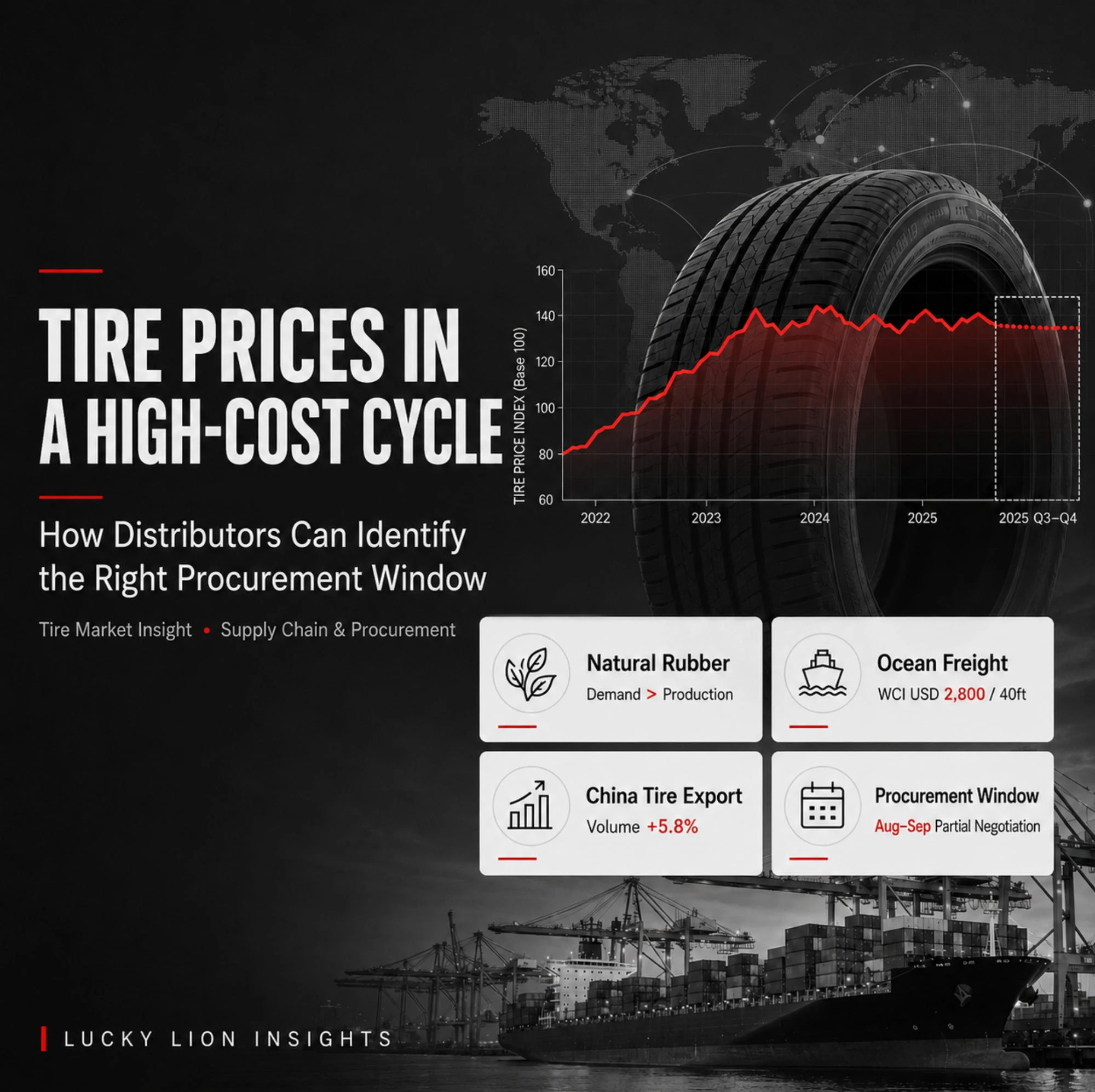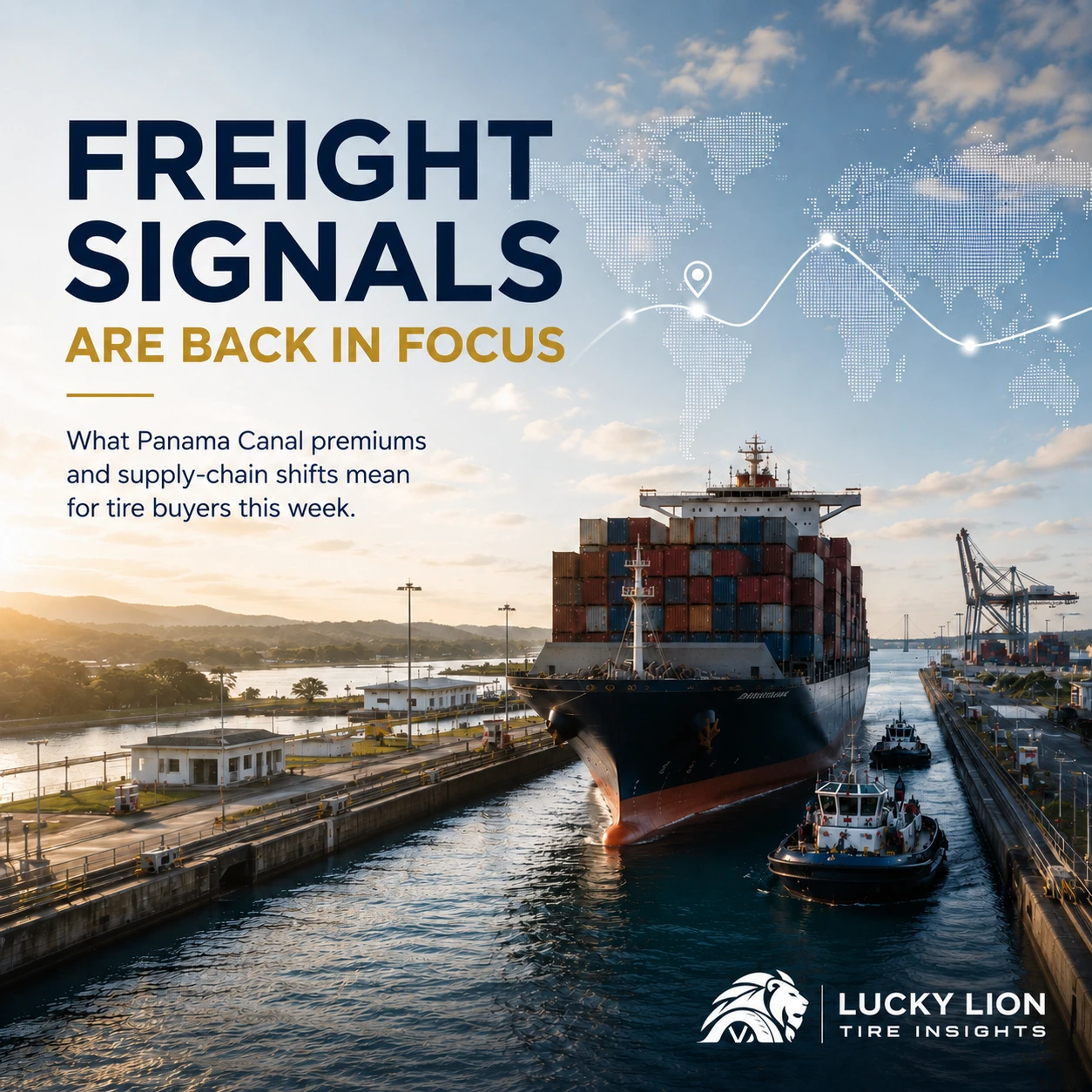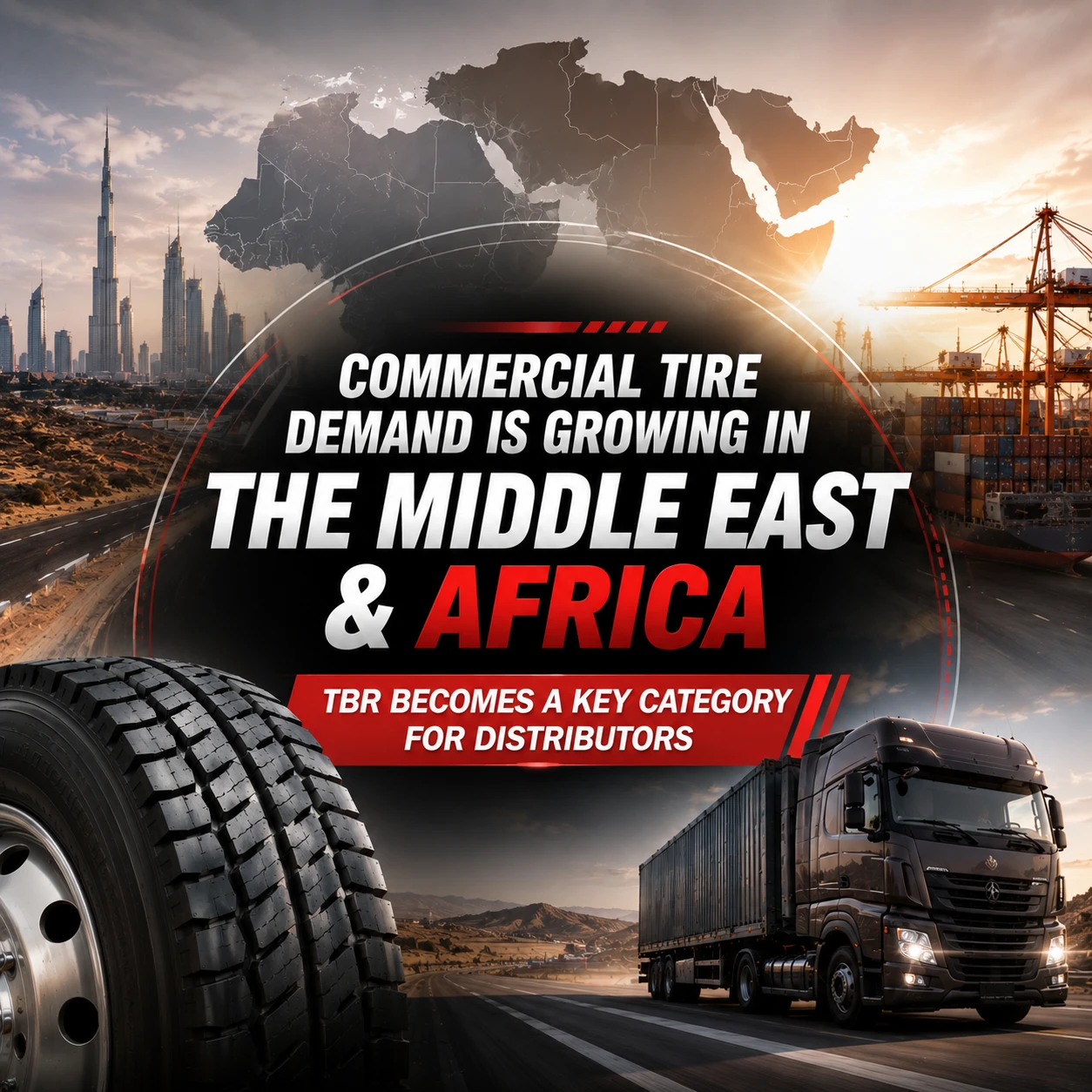







For tire importers, changes in international shipping are not simply a question of whether freight rates are rising or falling. Route conditions, vessel schedules, port operations, surcharges and transit-time uncertainty can all affect when tires enter local inventory, whether fast-moving sizes can be replenished on time and whether the final landed cost remains consistent with the original purchasing plan.
Freight volatility matters more than a single freight-rate direction
International container shipping conditions can vary considerably by route, origin port, destination, booking window and season. For tire purchasing teams sourcing from China and other Asian markets, it is therefore risky to manage procurement around a simplified assumption that freight is universally rising or falling.
A more practical approach is to evaluate shipping conditions together with inventory coverage, expected sales, production schedules and the required replenishment date. The objective is not necessarily to secure the lowest freight rate on a particular day, but to maintain a workable relationship between purchasing cost and product availability.
FOB price is only one part of the sourcing decision
For importers purchasing tires regularly, supplier quotations are only one component of procurement economics. International transport, import-related expenses, inventory holding and replenishment lead time can influence the commercial result of an order.
PROCUREMENT FOCUS
A lower FOB quotation does not automatically create a better sourcing solution. Product cost, loading, transportation, arrival timing and inventory requirements should be evaluated within the same cost and time framework.
When two supply options have similar product prices but different production coordination, shipment windows or execution reliability, their eventual inventory impact may be very different. This is why experienced procurement teams increasingly look beyond unit price and consider total landed cost together with execution efficiency.
Shipping delays can become an inventory problem
A change in a vessel schedule may appear to be only a logistics issue. For a distributor that depends on continuous replenishment, however, the commercial impact can appear in the warehouse. Fast-moving PCR sizes may run short while slower sizes remain in stock. For a TBR importer, insufficient availability of core commercial tire sizes may affect downstream customer purchasing schedules.
TIRE SOURCING TIMELINE
Factory Ready → Container Loading → Port Gate-in → Vessel Departure → Ocean Transit → Destination Port → Local Delivery → Warehouse Inventory
Supply stability should therefore be evaluated across the complete execution chain rather than only by asking whether production was completed on time.
Plan around the replenishment window, not only the order date
When transportation lead times are uncertain, importers can benefit from working backward from the date the tires are required in local inventory. This replenishment-window approach combines sellable stock, goods already in transit, supplier production time, loading arrangements and expected transportation time.
Five timing points for tire importers
01. Sales & Inventory Review — identify fast-moving sizes and available stock.
02. Purchase Decision — determine product mix, quantity and supply source.
03. Production & Loading — coordinate production progress and container loading.
04. Ocean Transit — monitor shipping schedules and destination-port developments.
05. Replenishment — move the products into local inventory for the next sales cycle.
PCR, TBR and specialty tires may require different replenishment strategies
A distributor managing a broad PCR range may need closer monitoring of fast-moving sizes and SKU coverage. A regional importer focused on TBR may place greater priority on continuity of core commercial tire sizes. OTR, agricultural and trailer tire purchasing may need to reflect project demand, seasonality and different sales cycles.
This means procurement should not apply one replenishment rule mechanically across every product category. Product mix, customer structure and local demand should help determine purchasing frequency and inventory coverage.
Build flexibility into the tire supply structure
For distributors managing many SKUs or frequent replenishment, the relevant question is not simply whether more suppliers are better. It is whether the existing supply structure can support the local sales rhythm. Depending on purchasing volume and market requirements, buyers may evaluate consolidated orders, phased purchasing or alternative supply resources.
For procurement teams comparing China, Southeast Asia and other sourcing regions, product suitability, origin, order volume, delivery cycle and destination-market requirements should be considered together. Diversification is useful only when it improves the commercial and operational fit of the supply plan.
Connecting products, supply resources and order execution
Logistics uncertainty cannot be solved by a single quotation. For tire importers planning quarterly or recurring purchases, a stronger sourcing process connects product selection, supplier coordination, production progress, container planning and actual inventory requirements.
Lucky Lion supports overseas importers, distributors and wholesalers with tire sourcing coordination, supply-resource screening, product portfolio discussions, factory communication and order follow-up. The objective is not to predict the lowest freight rate, but to help customers make clearer sourcing decisions across product, supply, timing and execution.
LUCKY LION TIRE SOURCING SUPPORT
Need to reassess your tire supply and replenishment plan?
If you are planning PCR, TBR, OTR, agricultural, trailer or other tire purchases, discuss your target market, product mix, sourcing requirements and order schedule with Lucky Lion.