





Tire Sourcing in a Noisy Trade Market: Why Execution Support Matters
For tire importers, distributors and channel partners sourcing from China or Asia, the sourcing question is no longer only who can quote faster. The more practical question is who can help keep the process visible, coordinated and moving until the order is truly completed.
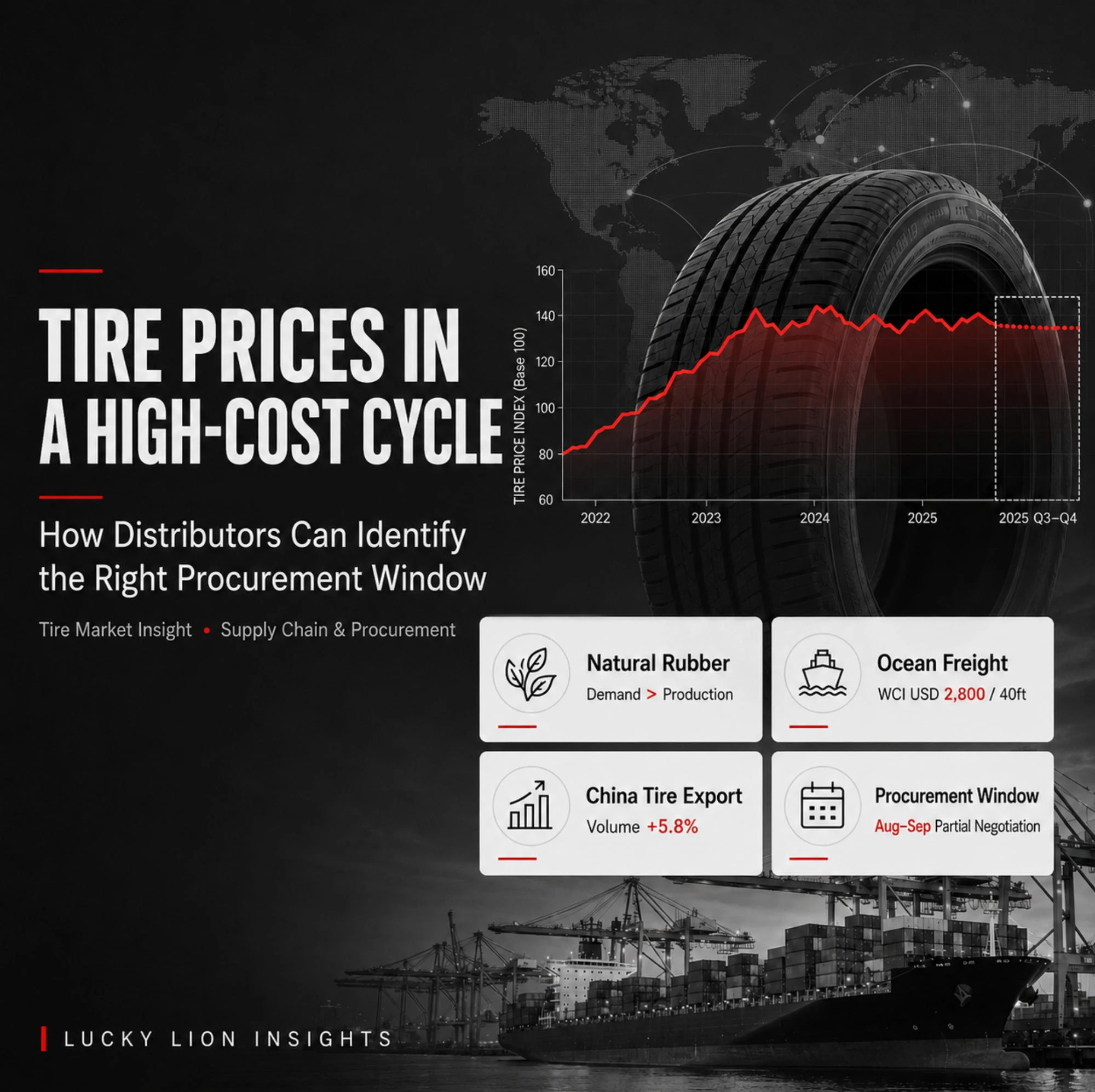
Global tire trade has entered a period in which buyers must look beyond product price. Anti-dumping decisions, duty reviews, changing freight routes, container rate movement and raw material volatility can appear at the same time. For a distributor planning quarterly PCR or light truck tire purchases, these signals affect landed cost, product positioning, stock timing and communication with downstream customers.
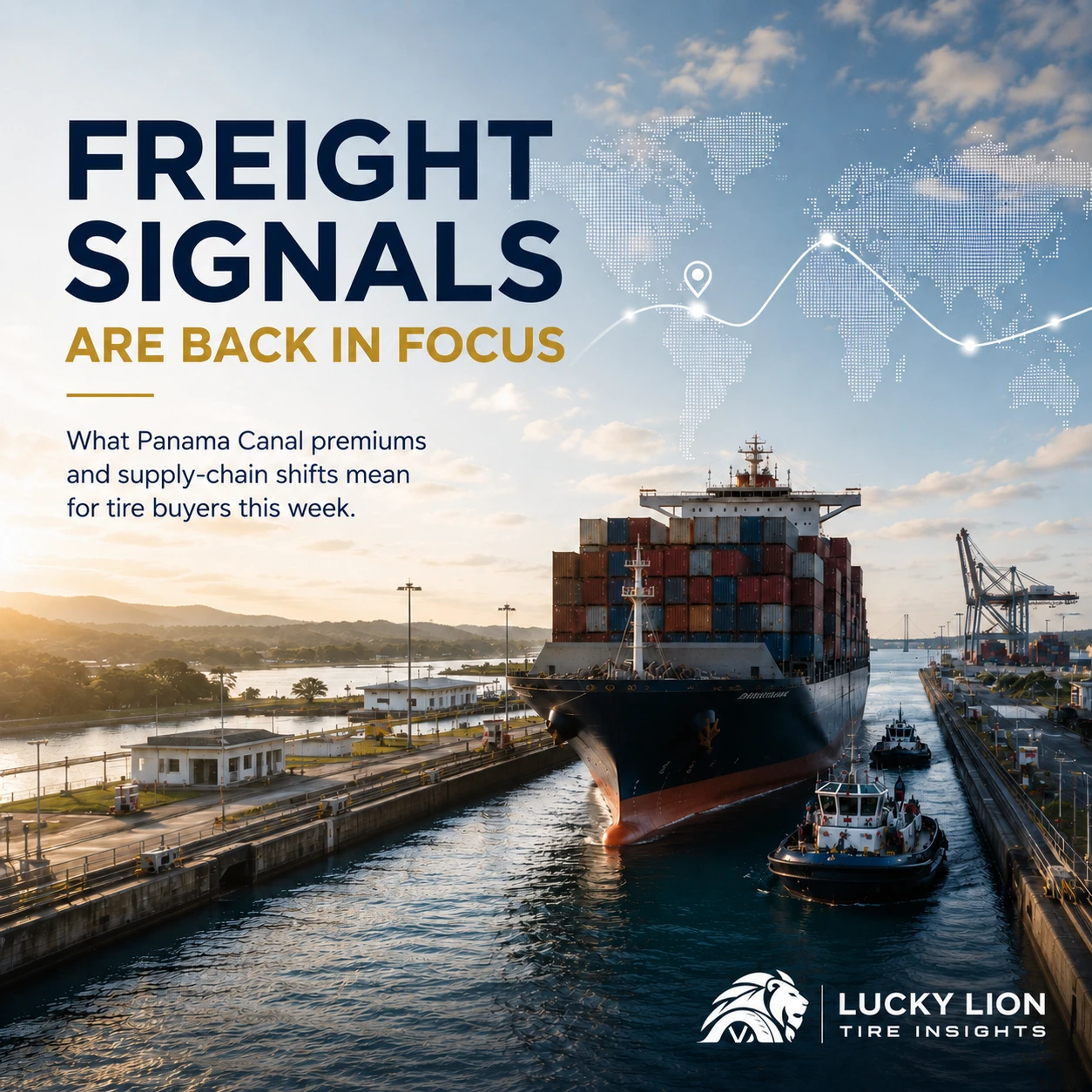
In the EU, recent anti-dumping measures on new pneumatic tyres from China with a load index not exceeding 121 remind importers to check supplier exposure, product scope and customs documentation carefully. In the United States, the continuation of existing trade remedy measures on passenger vehicle and light truck tires from China also reinforces the importance of origin records and document discipline. At the same time, changes around the Suez route and Asia-Europe freight rates show that delivery planning cannot be separated from sourcing decisions.
Procurement signal: when policy, freight and raw material factors move together, the hidden pressure is not only cost. It is execution control.
The visible issue is trade pressure. The hidden issue is execution pressure.
A duty change may directly affect margin planning, but the work after that is often more complicated. A European importer may need to confirm whether a size range falls within the affected scope, compare factories with different exposure, review shipping documents and update pricing with local distributors. A U.S. distributor working under continuing trade remedies may need clearer origin files, quotation validity control and shipment timing records.
For buyers shipping from Asia to Europe, route selection and freight timing can affect arrival dates and sales promises. At the same time, the buyer still needs to manage samples, packaging files, production updates, inspection coordination, container planning and after-sales feedback. This is where sourcing problems become operational rather than purely commercial.
Factory access does not automatically mean sourcing control
Factory-direct sourcing can work well for buyers with mature internal sourcing teams, stable product lines and enough time to follow factory details. Traditional trading mode is also practical for clear replenishment orders where the buyer wants one commercial window. The point is not that one model is always better. Different sourcing situations need different operating structures.
When tariff exposure, freight volatility, private label packaging, mixed-container planning and documentation all need attention, direct access alone may not be enough. Messages may be spread across several factories. Production updates may arrive late. File checks may be repeated. The buyer’s team may spend more time chasing progress than making market decisions.
Why Lucky Lion’s Service Provider Mode matters now
Lucky Lion’s Service Provider Mode is built around a practical sourcing reality: many overseas tire buyers do not only need a supplier. They need a reliable China-side sourcing and execution team. In this model, the buyer may keep direct factory payment and stronger factory-side transparency, while Lucky Lion supports supplier screening, product comparison, communication follow-up, sample coordination, order execution and document checking.
This is not a loose referral arrangement and it is not a promise of the lowest unit price. The value lies in reducing communication friction, lowering trial-and-error cost, improving execution rhythm and helping buyers maintain stronger control over the sourcing process.
Who benefits most from this model?
This model is especially relevant for distributors expanding PCR, TBR, trailer tire or private label product lines; importers comparing multiple factories; lean procurement teams without a China-side office; and brand operators who need packaging, specifications and supply rhythm to be aligned before scaling orders.
For simple repeat orders, Trading Mode may remain more convenient. For buyers with mature local teams in China, factory-direct management may still be effective. Lucky Lion’s value is to help customers choose a sourcing structure that fits their real operating needs rather than forcing one cooperation model on every order.
Practical takeaway
Price remains important, but the first quotation is only one part of sourcing cost. Delayed communication, wrong product matching, repeated sample revisions, unclear documents or missed shipment timing can create larger costs later. In a noisy market, execution discipline becomes part of commercial competitiveness.
This sourcing insight is not legal advice. Importers should verify the latest regulations, customs requirements and supplier documentation before confirming orders. From a procurement management perspective, the more stable path is to combine price comparison with process control, document discipline and China-side execution support.
Need to reassess your tire supply chain structure?
If you are evaluating PCR, TBR, OTR, agricultural, trailer or other tire sourcing plans, Lucky Lion can support supplier screening, product portfolio planning, factory communication, order follow-up and long-term supply coordination based on your target market and cooperation needs.