





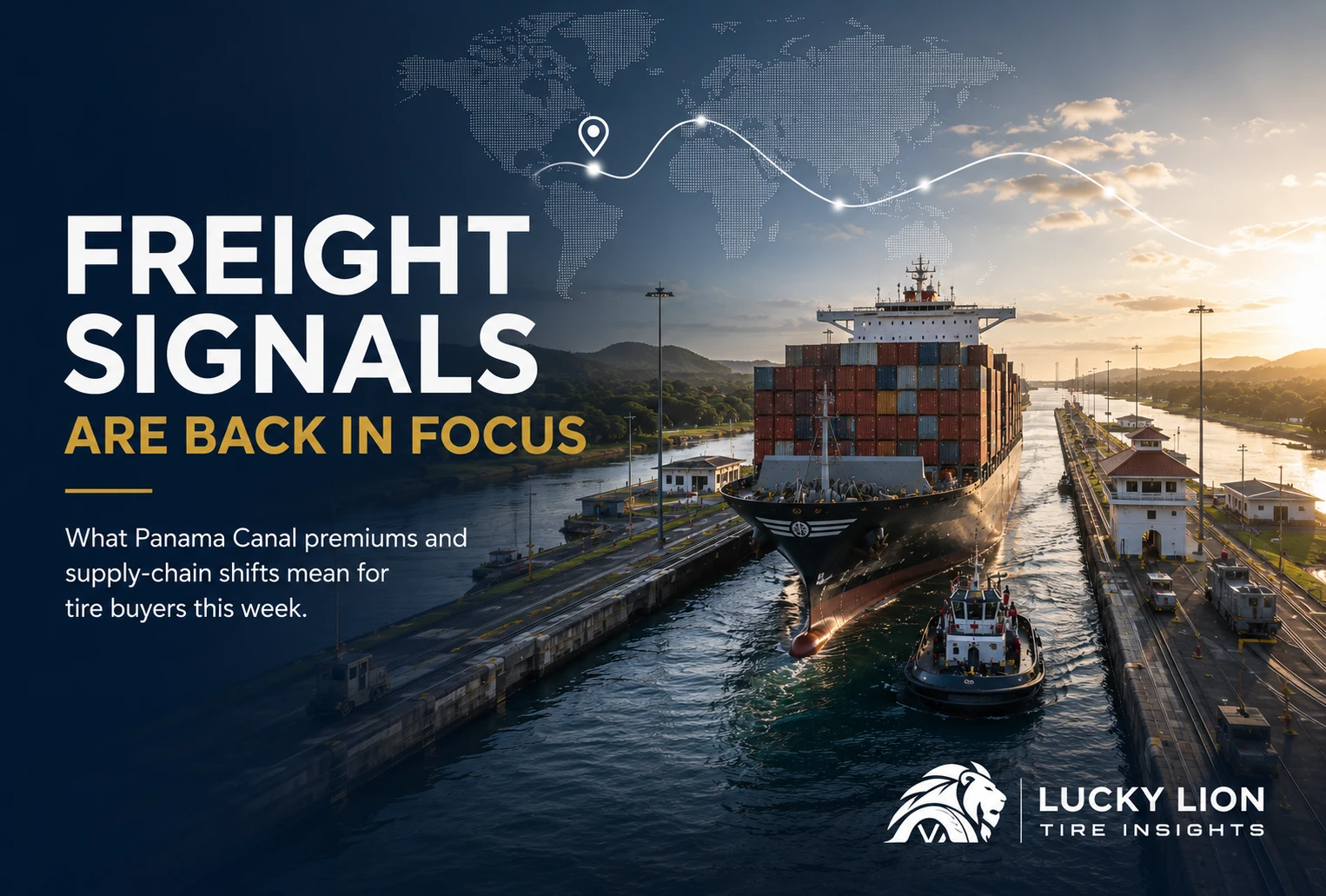
The rising premium for priority Panama Canal transits is becoming a cost signal worth watching for tire buyers. For commercial tire importers and distributors, this does not mean every shipment will be directly affected. It does suggest, however, that freight assumptions and landed cost models may need to be reviewed when route pressure increases.
1. Transit premiums are a signal of logistics pressure
Recent market reports indicate that some vessels have paid high auction premiums to secure priority transit through the Panama Canal. The canal authority has described these high bids as a result of market demand, urgency, and supply-demand conditions, rather than a formal increase in fixed tolls.
For tire buyers, the main point is not whether every shipment moves through the Panama Canal. The more important point is that this pricing signal reflects reduced flexibility in global shipping. When energy flows, container schedules, or specific trade routes come under pressure, carrier behavior, freight validity, and space availability may change quickly.
2. Tire sourcing is about landed cost, not only factory price
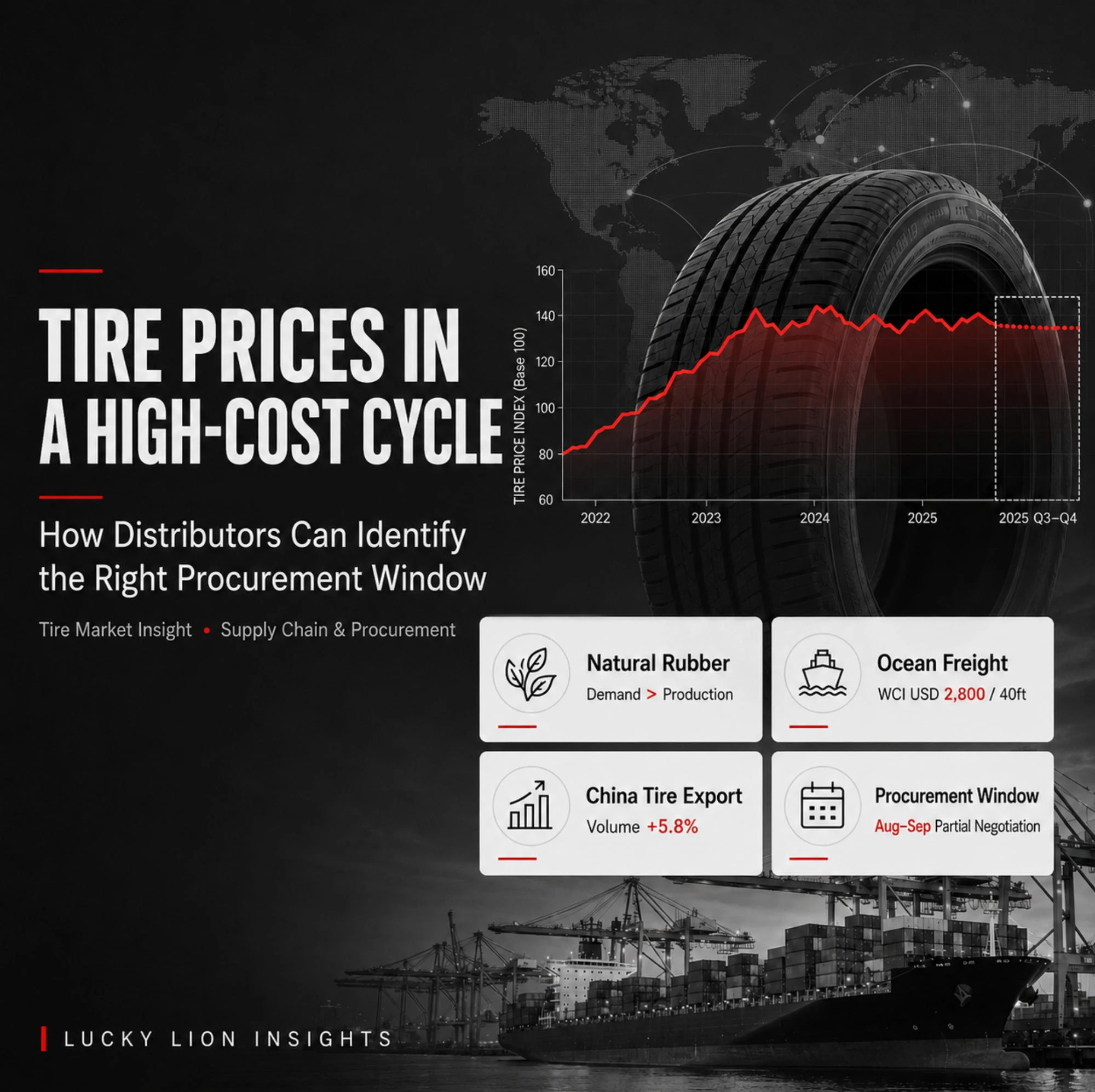
In tire sourcing, the FOB price is only one part of the total cost structure. For TBR, industrial, OTR, and long-term replenishment orders, the real business impact often depends on landed cost, including ocean freight, insurance, customs clearance, inland transport, cash cycle, and delivery stability.
Even when factory prices remain unchanged, higher freight rates, tighter booking windows, or longer transit times may change the economics of a previously reasonable purchase plan. This is especially important for commercial tire buyers with longer lead times or contract-based supply coverage.
- Route planning: Check whether shipments are exposed to major canal pressure, transshipment congestion, or temporary rerouting.
- Booking window: Avoid relying only on historical freight levels when calculating new order costs.
- Quote validity: During freight volatility, supplier quotations and forwarder quotations should be checked together.
- Purchase coverage: Long-term replenishment buyers should review inventory security, not only the lowest one-time price.
3. Raw material disruption can influence the broader cost environment
Recent disruptions related to the Strait of Hormuz have also raised market concerns about some industrial raw materials. For the tire industry, aluminium is not a core cost driver in the same way as natural rubber, carbon black, or oil-based chemicals. Still, it shows how geopolitical disruption can move through wider industrial supply chains.
This type of signal should not be read as a direct indication that tire prices will rise across the board. It is more useful as a risk management indicator. Buyers need to separate the cost factors that directly affect their orders from indirect variables that influence market sentiment and supply chain expectations.
4. Cost discipline remains important for the tire industry
Recent earnings from major tire manufacturers also show that cost management remains an important industry theme. Some companies are facing demand and cost pressure, while others have improved profitability through product mix, cost control, and lower year-on-year raw material costs.
This does not mean the market is sending a single shortage signal, nor does it mean all tire prices will move in the same way. A more practical conclusion is that tire buyers should confirm whether factory prices, freight levels, order cycles, and shipping documents still match current market conditions before placing the next order.
A stable landed cost view is often more valuable for importers than a single low quotation.
Conclusion
Panama Canal transit premiums may not directly affect every tire shipment, but they remind buyers that freight and trade execution conditions can still change the logic of landed cost. For buyers with long lead times, contract coverage, or replenishment pressure, reviewing supplier documents, freight assumptions, and booking arrangements before the next quotation is a more practical approach.
Lucky Lion Tire continues to monitor global tire trade, logistics costs, supply chain risks, and sourcing execution changes, supporting overseas importers, distributors, and commercial buyers with clearer and more controllable China-side tire supply coordination.